
IV therapy marketing works when it sells convenience, routine and a medically supervised experience, and avoids promising cures. The FTC’s first action against an IV clinic targeted exactly those promises. Clinics that grow build memberships around repeat visits, advertise hydration and recovery occasions, and track rebooking instead of first visits.
Demand is real and growing, which is why competition for the same local customers is rising too. This guide covers what you can and cannot say, how to price for repeat visits, which channels work, and how to measure the business so ad spend goes to the clients who come back.
The IV Therapy Market, And Why Claims Are The First Risk
Grand View Research, as listed on MarketResearch.com, sizes the global intravenous hydration therapy market at $2.83 billion in 2025 and forecasts $5.66 billion by 2033, a compound annual growth rate of 9.2% from 2026. More clinics, mobile services and med spas are adding drips, so ads alone rarely differentiate a business for long.
The bigger risk is what those ads say. In 2018 the FTC brought its first-ever action against an IV therapy marketer, a Texas and Colorado operator that claimed its drips could treat conditions including cancer, congestive heart failure, multiple sclerosis and diabetes. The order bars those claims unless they are backed by competent and reliable scientific evidence. The FTC’s Health Products Compliance Guidance applies the same standard to health claims generally, including testimonials and influencer posts. Treat every ad, landing page and social caption as advertising that has to meet it.
Safer Claims And Risky Claims For IV Ads
The safest ads describe the experience and the process, not medical outcomes. The table below is a starting point for your copy review, not legal advice; ask your medical director or a healthcare lawyer to sign off on every claim before it runs.
| Safer direction | Risky direction |
|---|---|
| Administered by licensed nurses after a health screening | Safe for everyone, no screening needed |
| Fluids and electrolytes delivered by IV | Cures hangovers, boosts immunity, detoxes your body |
| Book a drip at our lounge or at home in under an hour | Treats chronic fatigue, migraines or long-term illness |
| A relaxing 45-minute visit with a medical team on site | Clinically proven results without a cited study |
| Ask our providers which option fits your goals | Better than seeing your doctor |
| Real client reviews about the experience, shared with permission | Testimonials that describe disease outcomes |
Ad platforms add a second layer of review. Meta restricts copy that implies personal attributes such as health conditions, so “Feeling run down?” is safer than “Struggling with your fatigue?”. Expect ads that name prescription medications or treatment outcomes to be limited or rejected on most platforms.
Who Buys IV Therapy And What They Respond To
Most IV clients come in for an occasion or a routine rather than a diagnosis, so the strongest campaigns are built around moments. Travel days, weddings and bachelorette weekends, race days and training blocks, conference weeks and long shifts all create demand you can plan around. A mobile service can target event venues and hotels; a lounge can run weekday wellness and weekend recovery messaging to different audiences.
What persuades is usually practical: how fast the visit is, who administers it, whether there is a screening, what the space feels like, and what it costs. Price transparency matters too: clients comparing two lounges usually book the one that shows the menu and the price without a phone call. Short videos of the lounge, the nurse explaining the screening, and a client describing the experience tend to outperform stock imagery of drip bags. Partnerships with gyms, run clubs, salons and corporate wellness programs add referral volume that paid media cannot buy as cheaply. For brands selling oral supplements alongside drips, the same claims discipline applies; our guide to supplement Facebook ads covers it.
Memberships: The Math Behind Repeat Visits
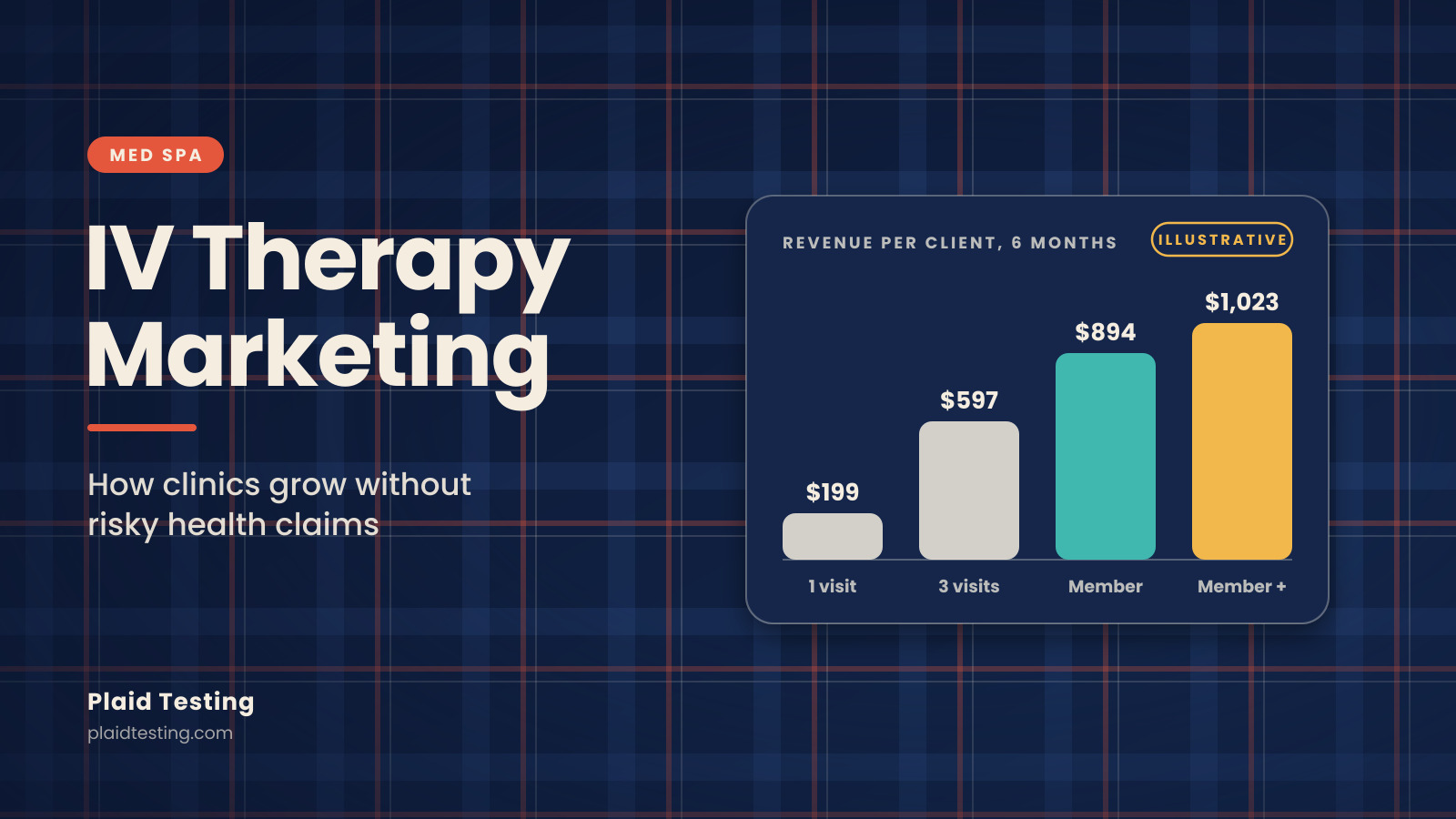
A single drip is a hard business to advertise profitably, because the acquisition cost lands on one visit. Memberships spread it across many. The figures below are illustrative only, to show the shape of the math.
| Model (illustrative) | Price | Revenue per client over 6 months |
|---|---|---|
| Walk-in drip, one visit | $199 | $199 |
| Walk-in, returns twice | $199 per visit | $597 |
| Membership with one drip per month included | $149 per month | $894 |
| Membership plus one add-on visit at a member rate of $129 | $149 per month plus $129 | $1,023 |
At an illustrative $120 to acquire a client, the single walk-in visit barely covers marketing once the cost of fluids, supplies and nursing time is included, while the membership client returns several times that. That is why the ad offer should often be a discounted first drip that leads into a membership consultation, and why member retention deserves as much attention as new client volume. Our guide to Botox marketing applies the same membership thinking to injectables.
Want to know what an IV client is really worth to your clinic? Claim a free growth audit. In 30 minutes we lay out acquisition cost against repeat visits for your clinic.
Channels That Work For IV Clinics
Local search is the base. A complete Google Business Profile with current reviews, service pages for each drip and location pages for mobile service areas capture people searching “IV therapy near me” at the moment they want to book. Google search ads extend that reach for high-intent terms; our Google Ads management page explains our approach.
Meta and Instagram build demand around occasions and routines: event weekends, training seasons, the week after the holidays. Run separate creative for each occasion rather than one generic wellness ad, and send traffic to a booking page that shows price, time and location immediately. Our Meta ads management covers this setup, and our guide to med spa advertising compares channel costs for aesthetic and wellness clinics. Email and SMS then do the retention work: rebooking reminders, member perks and seasonal offers to past clients.
A 90-Day Launch Plan For A New IV Offer
Whether you are opening a new IV lounge or adding drips to an existing med spa, the first three months decide whether the service becomes a steady line or a slow one. A simple sequence keeps spend tied to what you have learned.
| Window | Focus | Done when |
|---|---|---|
| Days 1 to 30 | Claims review, Google Business Profile, service pages, booking tracking, an introductory offer to existing clients and the email list | Every booking is tracked to its source and copy is approved by your medical director |
| Days 31 to 60 | Google search ads on high-intent terms, Meta ads for two or three occasions, first partnership with a gym or venue | You know cost per first booking and show rate by channel |
| Days 61 to 90 | Membership launch to first-time clients, rebooking reminders, budget shifted toward channels with the best return visits | Rebooking and membership conversion rates are reported weekly |
Resist scaling ad spend before day 60. Until you know show rates and rebooking by channel, a bigger budget mostly buys more one-time visitors.
Track Rebooking, Not First Visits
If your reporting stops at cost per booking, every channel looks similar. The difference shows up in who comes back. Connect your booking software to your ad accounts, send completed visits and membership sign-ups back as offline conversions, and report by cohort.
| Metric | What it tells you |
|---|---|
| Cost per first booking | Front-end ad efficiency |
| Show rate | Whether the booking flow and reminders work |
| Rebooking rate within 60 days | Whether the experience brings clients back |
| Membership conversion rate | Whether first visits turn into recurring revenue |
| Six-month revenue per client by channel | Which ads find clients worth keeping |
Our tracking and attribution service sets up this reporting. For med spas offering IV alongside aesthetics, cross-selling is the next lever: a drip client is a natural audience for laser or injectables, covered in our guide to laser hair removal marketing and on our med spa marketing page.
Adding IV therapy or trying to make it profitable? Book a no-cost growth audit with Jason Lu to review your claims, offer and tracking before you raise spend.
IV Therapy Marketing FAQs
Can I say IV therapy cures hangovers or boosts immunity?
Avoid it unless you have competent and reliable scientific evidence for the specific claim. The FTC has acted against an IV marketer for unsupported health claims, so describe the experience, the screening and the ingredients instead.
Can I run Facebook ads for IV therapy?
Yes, with care. Avoid disease and treatment claims, avoid copy that implies the viewer has a health condition, and expect closer review for health-related ads.
How do IV clinics get more repeat clients?
Offer memberships with an included monthly drip, book the next visit before the client leaves, and send rebooking reminders by SMS and email. Track rebooking rate by channel so ad spend goes to sources that bring clients back.
What is the best marketing channel for an IV therapy business?
Local search and a strong Google Business Profile usually come first, then Google search ads for high-intent terms and Meta ads for occasion-based demand. Email and SMS drive the repeat visits that make the economics work.
Are testimonials allowed in IV therapy ads?
Genuine client reviews about the experience are generally fine with permission. Testimonials that describe treating a disease carry the same risk as making the claim yourself.