
INDUSTRIES · FOOD AND BEVERAGE
Food and beverage marketing agency for brands that sell online
Plaid Testing is a food and beverage marketing agency for brands that sell online and spend $50K or more a month on ads. We run Meta, Google and creative testing for packaged food, snack, coffee and beverage brands, and set budgets by contribution margin after shipping, not by platform ROAS. Restaurants and local food service are not a fit.
20.9%
Of US grocery spending went online in Q3 2026, a record
Brick Meets Click, Q3 2026
+20.7%
Year-over-year growth in US online grocery sales, Q3 2026
Brick Meets Click, Q3 2026
39%
Of shoppers in a Baymard survey abandoned checkout over extra costs such as shipping
Baymard Institute
What a food and beverage marketing agency should run
Food is bought on appetite and habit, and the money is made on the reorder. The table shows what that changes in each channel.
| Channel | What is different for food and beverage | What we run |
|---|---|---|
| Meta (Facebook and Instagram) | The product has to look good to eat in the first second, and repeat purchase matters more than the first order. | Prospecting by product line and occasion, offer tests such as bundles, samplers and first-order pricing, and retention audiences kept apart from new-customer budgets. |
| Google Search and Shopping | Shoppers search by product and diet, such as “high protein snacks” or “decaf coffee pods”, and brand searches grow as retail distribution grows. | A Shopping feed built around flavor, size, pack count and dietary attributes, with brand terms separated so you do not pay for clicks you would get anyway. |
| Amazon and retail | Paid social often drives sales on Amazon and in stores that the website never sees. | Where you share the data, Amazon and retail sales read next to site revenue, so a channel is not cut for working somewhere else. |
| Subscriptions | The first order often loses money and the reorders pay for it. | Payback tracked by acquisition month, with target cost per acquisition set from what a subscriber is worth. Our supplements page walks through the same payback model. |
| Tracking and attribution | Subscriptions, one-time orders and marketplace sales all report differently. | Triple Whale pixel and Conversions API, with subscription and one-time orders tracked as separate conversions. |
Where food and beverage paid media breaks
1. Shipping decides the first order
Food is heavy, often perishable and cheap per unit, so shipping can be a large share of the basket. Extra costs such as shipping are the leading reason shoppers abandon a checkout: 39% of users in a Baymard Institute survey left one for that reason.
We have seen what one fix is worth. On an apparel account Triple Whale published, cutting a $20 flat shipping fee to $9 lifted conversion from 0.9% to 1.64% and Meta ROAS from 1.3x to 2.1x. In food, the same question decides whether you need a free shipping threshold, bundles that raise the basket, or subscription pricing that absorbs delivery. We answer it with your margin data before we spend more on traffic.
2. The first order is not the business
A sampler or first box often loses money once product, shipping and discount are counted, and the brand earns it back on reorders. Judging Meta on first-order ROAS cuts the campaigns that bring in the best subscribers. We report new-customer ROAS for the first order and payback by acquisition month, and set the target cost per acquisition from the payback, not the other way round.
3. Claims get ads rejected and labels questioned
Food ads are full of words with legal meanings. The FDA’s updated definition of “healthy” took effect on 25 February 2025, with compliance required by 25 February 2028: a food has to contain minimum amounts from food groups and stay under limits for added sugars, saturated fat and sodium. Alcohol is a restricted category under Meta’s advertising standards. We check each claim in an ad against the label and the platform’s rules before it runs.
4. You compete with the weekly grocery order
Brick Meets Click measured online grocery at a record 20.9% of US grocery spending in Q3 2026, with sales up 20.7% on the year and delivery driving most of the increase. A brand selling direct competes with that cart, so the offer needs a reason to buy from you: range, freshness, a subscription price, or a product the grocery app does not stock. We test those reasons as separate ad angles and keep the one that pays back.
How we run food and beverage accounts
- Audit. We read the ad accounts, feed and tracking against Shopify, and model shipping cost and payback by product line. You get a written list of what is costing money, ranked by size.
- Rebuild. Campaigns split by product line and occasion, offers tested against each other, subscription and one-time orders tracked separately, and every claim checked before launch.
- Scale. Budget follows payback and contribution margin after shipping. A twice-daily review of blended, platform and new-customer ROAS flags the accounts that need attention.
Want us to look at your account first? Book a free 30 minute growth audit.
Proof: the operating system Triple Whale published
Triple Whale published how we use Moby, its AI teammate, across our apparel accounts. These are the checks that matter most for food and beverage brands.
| Check | What it found on one apparel account | Why it matters for food and beverage |
|---|---|---|
| Checkout funnel crawl | A $20 flat shipping fee caused a sharp drop between cart and checkout. At $9, conversion rose from 0.9% to 1.64% and Meta ROAS from 1.3x to 2.1x. | Food baskets face the same shipping question, often with heavier or perishable orders. |
| Daily product pick | Each morning, recommends which products to push using real-time Shopify sales and week-over-week momentum. | Flavors and seasonal products rise and fall within weeks. |
| Meta and Shop Ads audience overlap, 90 days | 52% overlap. About $17,000 a week of Shop Ads spend moved to channels that were not double counting. | Brands that live on reorders are exposed to channels claiming customers they already have. |
Read the Triple Whale case study.
What this does not claim. These results come from apparel accounts, not food. They show how the work is run, not what a food brand will see. Each figure is from a single account, as published by Triple Whale.
Who this is for
- Packaged food, snack, coffee, tea and beverage brands selling direct online, spending $50K or more a month on paid media or ready to.
- Brands with a subscription or a regular reorder cycle.
- Brands also selling on Amazon or in retail who want paid social judged on total sales, not only site revenue.
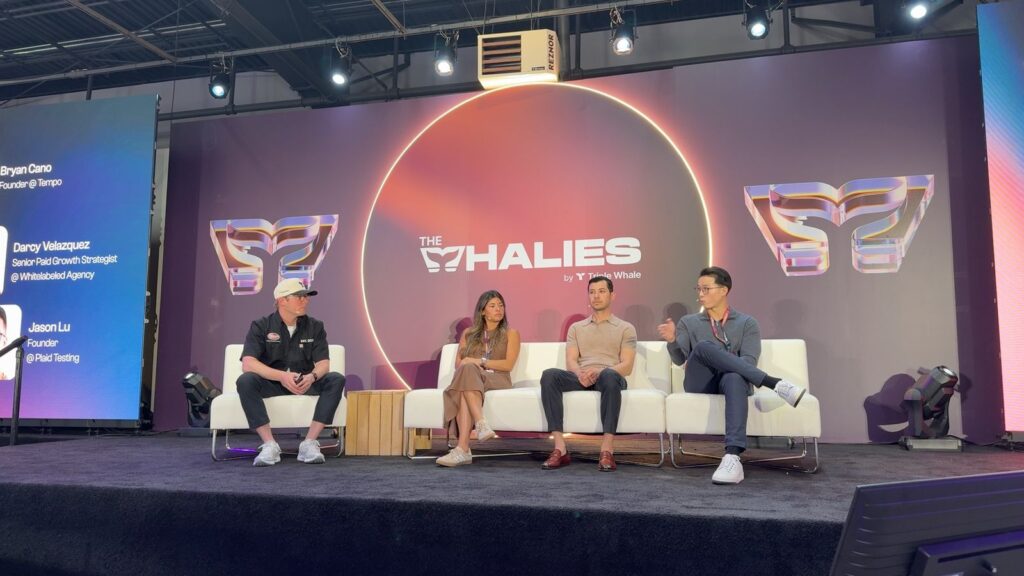
- Founders who want a senior operator accountable for the account. Jason Lu has run paid media for food brands and leads every engagement.
Not a fit: restaurants, cafes, food trucks and other local food service.
What it costs
Pricing depends on ad spend, channels and whether you need fractional CMO leadership on top of media buying. Our guide to how much marketing agencies charge explains the common models. The growth audit is free.
Questions food and beverage founders ask us
Do you work with restaurants?
No. We work with food and beverage brands that sell products online. Restaurants and local food service need local search and delivery-app marketing, which is a different job.
Can you advertise alcohol brands?
Alcohol is a restricted category under Meta’s advertising standards, with rules on where and to whom ads can run. We run campaigns inside those rules and confirm the account’s settings before launch.
Should a food brand focus on Meta or Google?
Meta is usually where new customers come from, because most shoppers are not searching for a brand they have not heard of. Google Shopping captures searches for a specific product or diet. We weight budget toward whichever channel pays back faster on your margin.
How do you measure a subscription food brand?
On payback, not first-order ROAS. We track new-customer ROAS on the first order and revenue per customer by acquisition month, then set the cost per acquisition the subscription can carry.
Get your free 30 minute growth audit
We’ll show you where your account is losing money, including shipping and payback, before you sign anything.